HIFU vs Facelift: What Canberra Clients Should Know

If you have started noticing softer jawlines, looser skin around the cheeks, or that slightly tired look that makeup cannot quite fix, you are not alone. More people in Canberra are looking for ways to refresh their appearance without necessarily choosing major surgery. That is exactly why the conversation around HIFU Canberra treatments has grown so quickly in recent years.
For many clients, the real question is not simply, “How do I look younger?” It is, “What is the right level of treatment for me?” Some people want a subtle, natural lift without downtime. Others are dealing with more advanced skin laxity and want a stronger correction. That is where the comparison between HIFU and a traditional facelift becomes important.
Both options are designed to address visible signs of ageing, but they are not interchangeable. One is non-surgical and works by stimulating your body’s own collagen response over time. The other is a surgical procedure designed to reposition and tighten tissue more dramatically. Understanding the difference can help you make a far more confident decision.
At Sycamore Medi Spa, the focus is on personalised treatment planning rather than one-size-fits-all advice. That matters, because the best anti-ageing treatment is not always the most aggressive one. Sometimes, a well-chosen non-surgical approach is exactly what a client needs.
What Is HIFU, and How Is It Different From a Facelift?
HIFU stands for high-intensity focused ultrasound. In aesthetic medicine, it is used as a non-surgical skin tightening treatment that delivers focused ultrasound energy beneath the surface of the skin. That energy creates controlled heat at specific depths, which encourages collagen production and gradual tightening over time. Clinics and dermatology sources describe ultrasound tightening as a treatment often used for areas such as the brow, under-chin area, neck, and parts of the lower face where mild to moderate laxity becomes more noticeable.
A facelift, by contrast, is a surgical procedure. It is designed to improve more obvious signs of facial ageing such as sagging skin, jowls, and loose tissue around the lower face and neck. Rather than stimulating collagen gradually, surgery repositions underlying tissue and removes or tightens excess skin for a more immediate and more dramatic change. Authoritative medical sources also note that a facelift involves recovery time and carries the kinds of risks that come with surgery, including bleeding, infection, scarring, and reactions related to anaesthesia.
So right away, the difference is clear:
- HIFU is non-surgical
- A facelift is surgical
- HIFU gives gradual improvement
- A facelift produces stronger structural change
- HIFU suits earlier or moderate ageing concerns
- A facelift is generally considered for more advanced laxity
That does not mean one is “better” than the other in every case. It means they solve different levels of the same problem.
Why More Canberra Clients Start With HIFU
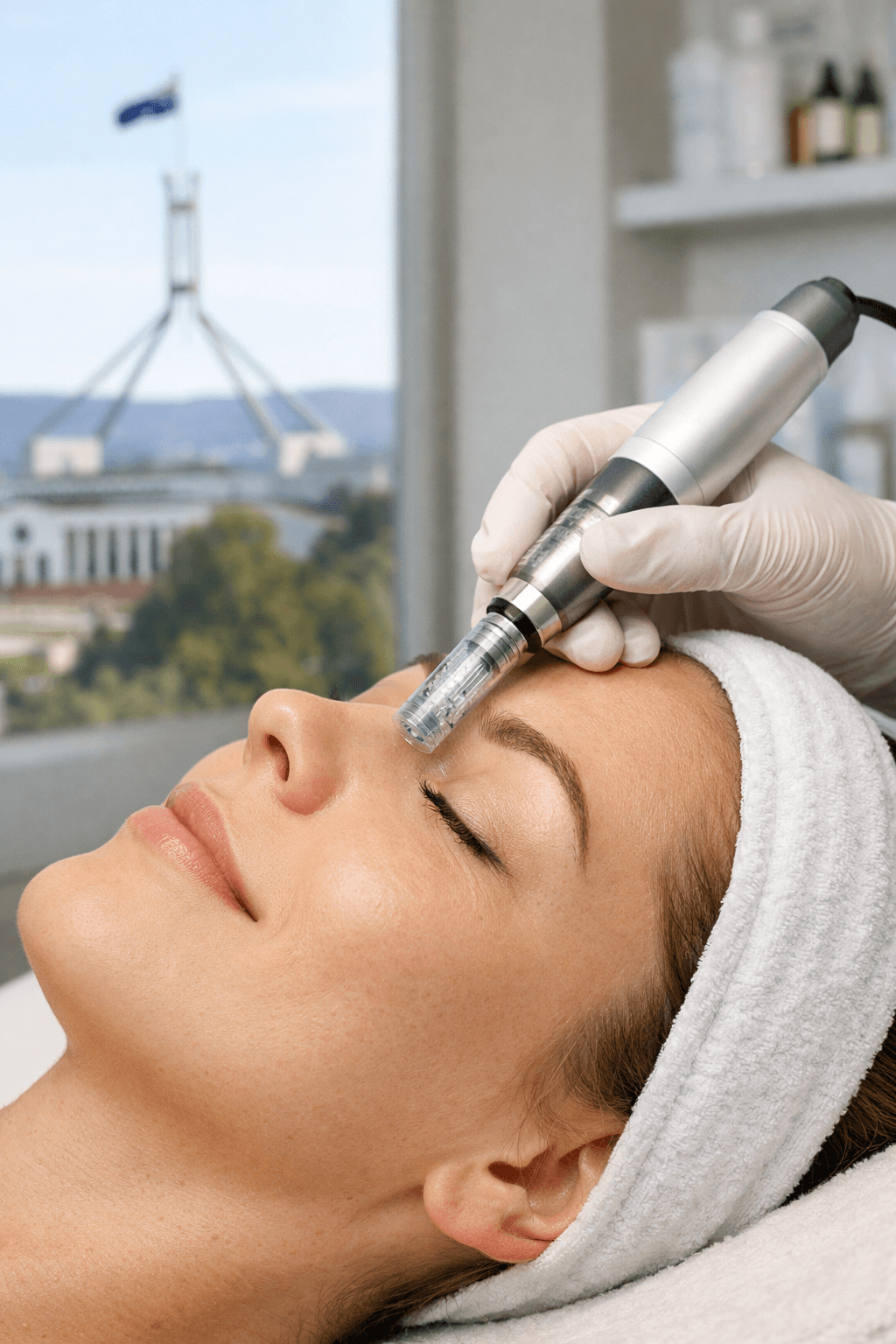
There is a reason non-surgical lifting treatments are getting so much attention. Many people are not looking for a dramatic reinvention. They want to look fresher, firmer, and a little more defined, while still looking like themselves. That is exactly where HIFU often fits best.
A lot of clients exploring HIFU in Canberra are in that in-between stage. They may not feel ready for surgery, but they are beginning to notice:
- softening along the jawline
- mild sagging around the cheeks
- early laxity under the chin
- reduced firmness in the lower face or neck
In those cases, non-surgical tightening can be appealing because it works with your skin’s natural regenerative process rather than forcing an immediate surgical change. The American Academy of Dermatology notes that ultrasound-based tightening can lead to modest lifting and tightening, often becoming more noticeable over a period of two to six months as collagen rebuilds. That gradual improvement is a big part of why the result tends to look natural rather than abrupt.
At Sycamore, clients interested in this type of treatment can explore LIFTERA COOL, the clinic’s advanced HIFU technology for non-surgical face lifting and skin tightening. For people still researching whether this path feels right, Sycamore’s blog post on how HIFU is reshaping anti-ageing in Canberra is also a useful starting point.
What HIFU Does Well
One of the biggest mistakes people make is expecting HIFU to behave like surgery. It does not. Its strength is not dramatic repositioning. Its strength is subtle lifting, firmness, and support for collagen renewal.
In the right candidate, HIFU can help with:
- improving the look of mild to moderate skin laxity
- creating a firmer-looking jawline
- softening the appearance of early jowls
- giving the lower face and neck a more defined look
- supporting a more refreshed appearance without incisions
This is especially attractive for clients who want treatment with minimal interruption to work, social life, or family commitments. A facelift may involve significant recovery and planning. HIFU, on the other hand, is often chosen by people who want something lower commitment and less invasive.
That does not mean it is a “lunchtime miracle”. Good HIFU is about realistic expectations. The best results are usually seen in people who still have enough skin elasticity for collagen stimulation to make a visible difference. It is not a replacement for surgery in people with heavy sagging or a lot of redundant skin.
Where a Traditional Facelift Still Has the Advantage
There are situations where a facelift remains the stronger option. If a client has advanced laxity, significant jowling, or substantial loose skin around the neck and lower face, surgery can create a degree of correction that non-surgical treatments simply cannot match. A facelift is designed to address deeper structural ageing more comprehensively.
That is why the choice should not be driven by trend or fear. It should be driven by the actual condition of the skin and tissue.
A facelift may make more sense when someone has:
- pronounced jowls
- heavy lower-face sagging
- significant loose neck skin
- a desire for more dramatic correction
- realistic expectations about surgery and recovery
Medical sources such as the NHS and Mayo Clinic make it clear that a facelift is a serious cosmetic procedure. It can improve visible signs of ageing in the face and neck, but it is still surgery, which means it requires proper consultation, recovery planning, and an honest understanding of potential complications.
For many Canberra clients, this is the turning point in the decision. They realise they do not actually want the strongest possible intervention. They want the right intervention.
HIFU vs Facelift: The Most Important Differences
When people compare these two options, they are really comparing four things: results, downtime, comfort, and commitment.
1. Results
A facelift generally delivers more dramatic and more immediate structural improvement. HIFU delivers a softer, more natural-looking result that develops gradually.
If your goal is a subtle refresh, HIFU may be enough. If your goal is substantial correction of heavier sagging, surgery may be more appropriate.
2. Downtime
This is one of the biggest reasons many clients start with HIFU. Non-surgical tightening appeals to people who do not want weeks of recovery or the practical demands that come with surgery. A facelift, by definition, involves healing time and post-operative care. HIFU is often chosen because it fits more easily into a busy lifestyle.
3. Risk Profile
Because HIFU is non-surgical, it avoids the incisions, anaesthesia, and surgical recovery associated with a facelift. Surgery can absolutely be appropriate in the right case, but it naturally comes with a higher level of commitment and risk. That is not a flaw of surgery. It is simply part of what surgery is.
4. Maintenance
A facelift is usually thought of as a bigger, longer-term intervention. HIFU is more often part of an ongoing skin maintenance strategy. Some clients prefer that because it gives them more flexibility. They can start conservatively and build their treatment plan over time rather than making one major change all at once.
Who Is Usually a Better Candidate for HIFU?
If you are looking into HIFU Canberra options, there is a good chance you may be a better fit for HIFU if the following sounds familiar:
- You have mild to moderate skin laxity rather than severe sagging
- You want natural-looking improvement, not a dramatic change
- You are not ready for surgery or do not want surgical downtime
- You care about prevention as much as correction
- You are happy with gradual improvement over several months
This is why non-surgical lifting has become such a strong category in aesthetic care. It fills the gap between skincare-only approaches and full surgery.
At Sycamore, that broader approach matters. Some people may benefit most from HIFU. Others may get better overall outcomes when HIFU is part of a more layered plan that also includes other skin-firming or surface-focused treatments. For example, clients concerned about both laxity and texture may also want to explore options like Diamond Polar treatment, which uses radiofrequency for skin tightening, or read more about non-surgical face lifting options in Canberra.
Why the “Middle Ground” Matters So Much
One reason people get stuck choosing between HIFU and a facelift is that they think the decision must be all or nothing. In reality, aesthetic treatment is often more nuanced than that.
A person may not be ready for surgery today, but still want to take action now. A person may also never need surgery if they start early enough with well-selected non-surgical treatments and good skin maintenance. On the other hand, some people spend too long hoping non-surgical treatments will fix more advanced laxity that actually needs a surgical consultation.
That is why the best advice is not “always choose HIFU” or “just get a facelift”. The best advice is to match the treatment level to the concern level.
For Canberra clients who want a fresher, lifted appearance without looking overdone, the middle ground is often exactly where the best decision lives.
HIFU Is Not About Looking Different
This is worth saying clearly. The appeal of HIFU is not that it can make you look like a different person. It is that it can help you look a little more like yourself again.
That distinction matters.
A lot of clients are not chasing a dramatic anti-ageing transformation. They want:
- a slightly firmer profile
- better definition around the jawline
- a more rested look
- confidence in photos and in person
- results that do not invite obvious comments
That is also why consultation quality matters so much. A clinic should be honest about whether HIFU is likely to meet your goals. If the concern is too advanced, that should be said clearly. Good aesthetic planning is not about selling the most convenient treatment. It is about recommending the most suitable one.
If you want a broader understanding of how subtle lifting approaches are evolving locally, Sycamore’s article on Face Lifting Canberra: subtle ways to restore a younger-looking profile is another relevant read, especially for people comparing gentle lifting options rather than jumping straight to surgery.
What Canberra Clients Should Ask Before Choosing Either Option
Before booking any treatment, it helps to ask practical questions, not just emotional ones.
Questions to ask if you are leaning toward HIFU
- Is my skin laxity mild, moderate, or advanced?
- Am I a realistic candidate for non-surgical lifting?
- How gradual will my results be?
- Will I benefit from combining HIFU with other treatments?
- What maintenance might I need later?
Questions to ask if you are considering a facelift
- Am I comfortable with surgery and recovery time?
- Do I understand the possible risks and complications?
- Am I looking for structural correction rather than subtle refinement?
- Have I had a proper consultation with a qualified medical professional?
- Is my motivation realistic and well considered?
These questions help shift the decision away from marketing language and back toward what actually matters: suitability, safety, expectations, and outcome.
For general patient education, reputable sources such as the American Academy of Dermatology and the Mayo Clinic facelift overview are useful places to understand the broader differences between non-invasive skin tightening and surgical facial rejuvenation.
The Best Choice Is the One That Matches Your Stage of Ageing
The most helpful way to think about this is simple:
If you want subtle lifting, minimal downtime, and a natural-looking refresh, HIFU may be the more suitable place to start.
If you want more dramatic correction of advanced sagging and loose skin, a facelift may offer the stronger result.
Neither option is automatically right. Neither option is automatically wrong. The right answer depends on how much laxity you have, how quickly you want to see change, how comfortable you are with surgery, and what kind of outcome feels right for you.
That is why so many people begin with a personalised consultation rather than trying to force themselves into a treatment category.
Final Thoughts
The comparison between HIFU and a facelift is not really about which treatment sounds more impressive. It is about choosing the treatment that makes sense for your face, your lifestyle, and your comfort level.
For many people exploring HIFU Canberra treatments, the appeal is obvious: no surgery, no dramatic recovery, and a gradual improvement that still feels like them. For others, the level of ageing may simply have moved beyond what a non-surgical lift can realistically achieve.
The good news is that you do not have to guess.
If you are curious about non-surgical lifting, Sycamore Medi Spa offers a strong starting point through its LIFTERA COOL HIFU treatment page and its broader range of skin-firming and rejuvenation treatments. The best next step is not choosing the trendiest option. It is getting clear, tailored advice based on your actual skin concerns and goals.